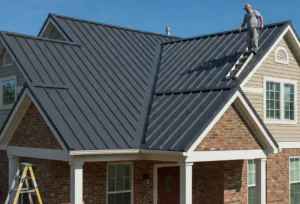

A complete roof replacement changes more than the visible roof covering. It renews the assembly that manages water over the roof surface and around the places where the roof changes direction or meets another building component. For a Bay Area property owner planning ahead of the wet season, that system-level view is often more useful than focusing on a single material alone.
The Roof Covering Is Only One Layer
Shingles, tile, metal panels, or a low-slope membrane are the exterior surface of the roof system. Beneath that surface, compatible underlayment, flashings, edges, and attachment details work together. The required components vary by the selected system and roof configuration, so the proposal should identify what is included and where it will be installed.
Transitions Receive Special Attention
Valleys and changes in roof plane
Valleys collect water from more than one roof plane. In a complete replacement, the valley detail is rebuilt as part of the new system so the roof covering and the waterproofing layers work together.
Chimneys, skylights, walls, and penetrations
These locations interrupt the main roof surface. Flashings and compatible materials need to be integrated in a sequence that directs water outward. The exact detail should reflect the roof material, adjacent construction, and manufacturer requirements where applicable.
Edges, drainage, and low-slope areas
Roof edges and drainage paths need to work with the roof’s geometry. For flat or low-slope roofs, the design may include membrane transitions, drainage planning, and cover-board or insulation decisions where they are part of the selected assembly. A coating or membrane should not be presented as a substitute for correcting a larger system issue unless the scope and conditions support that recommendation.
What the Replacement Process Can Reveal
Some conditions are not visible until the old roofing is removed. The underlying deck and adjacent details can then be evaluated within the limits of the opened work area. A well-written proposal should explain any included allowance, the documentation process, and the requirement for written approval before additional work outside the agreed scope proceeds.
Why Timing Still Matters
Planning before recurring rain gives the owner more time to review material choices, coordinate related work, and understand the proposed system. It does not eliminate weather considerations, but it can make the project more organized and reduce the pressure to make a full replacement decision at the last moment.
Plan a Complete Roofing System
Imperia Roofing and Exteriors installs complete roofing replacement systems for Bay Area residential, commercial, and multi-unit properties. Schedule an appointment to discuss the roof configuration, materials, transitions, and timing that fit your project.
Schedule an appointment: https://imperiare.com/schedule-an-appointment/
Frequently Asked Questions
Will every roof replacement include the same details?
No. Material selection, roof slope, drainage, penetrations, and existing conditions affect the appropriate system and scope.
Can a new roof be planned with future solar or skylight changes in mind?
Coordination should be discussed before the roofing work begins. The appropriate approach depends on the existing and planned components at the property.