NOAA’s October 15 seasonal outlook favored above-normal November-through-January precipitation for much of California. A seasonal outlook changes probabilities over a broad area; it does not tell a Bay Area owner which roof material to choose or when rain will reach a particular address. System selection still begins with the building.
Start with geometry and slope
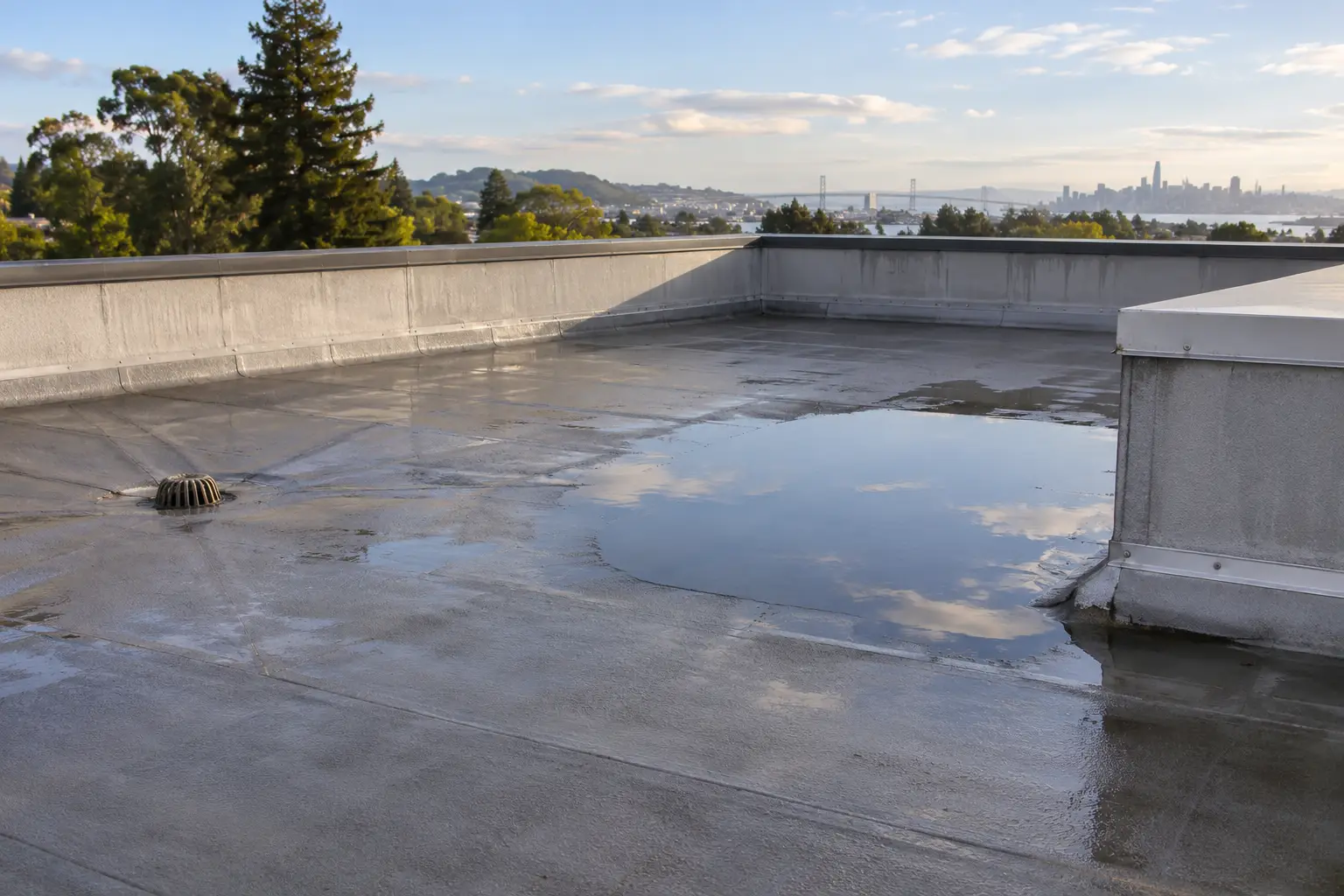
Steep-slope and low-slope roofs manage water differently. Asphalt shingles, tile, and many metal profiles are commonly associated with sloped assemblies. TPO, PVC, and modified-bitumen systems are among the options used on low-slope roofs. The dividing line is not appearance alone. Slope, drainage, transitions, penetrations, deck condition, and manufacturer requirements all influence whether a system is appropriate.
Compare assemblies, not samples
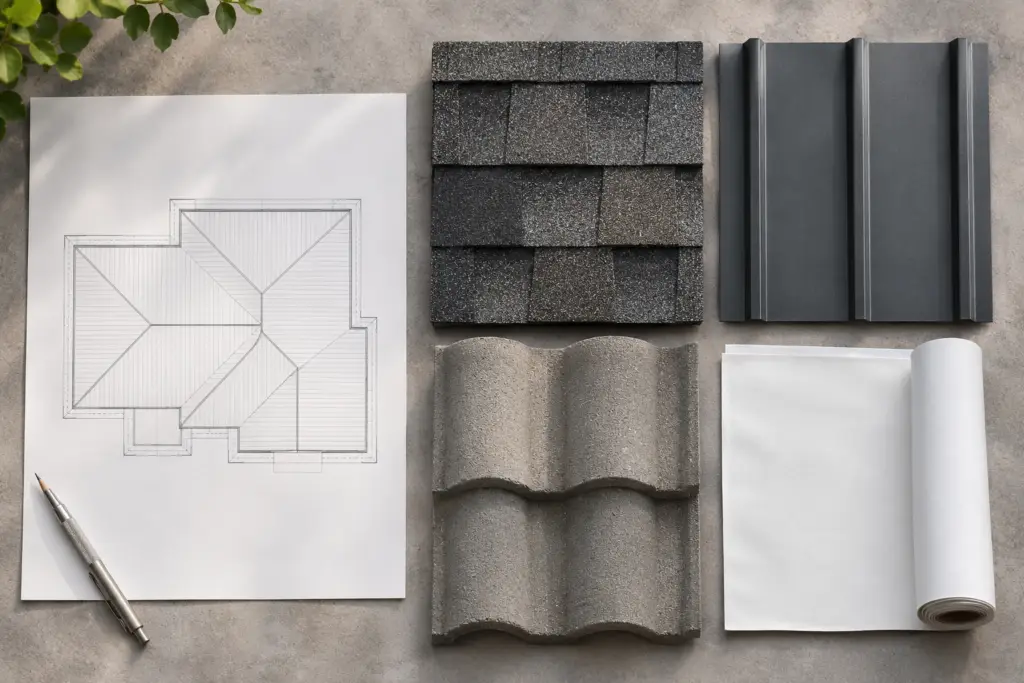
A roofing product is one layer in a larger assembly. Underlayment, insulation where present, attachment, flashing, edges, valleys, curbs, drains, and substrate preparation affect how the completed roof functions. Two buildings using the same visible material may require different details because their geometry and exposure differ.
Understand the main system families
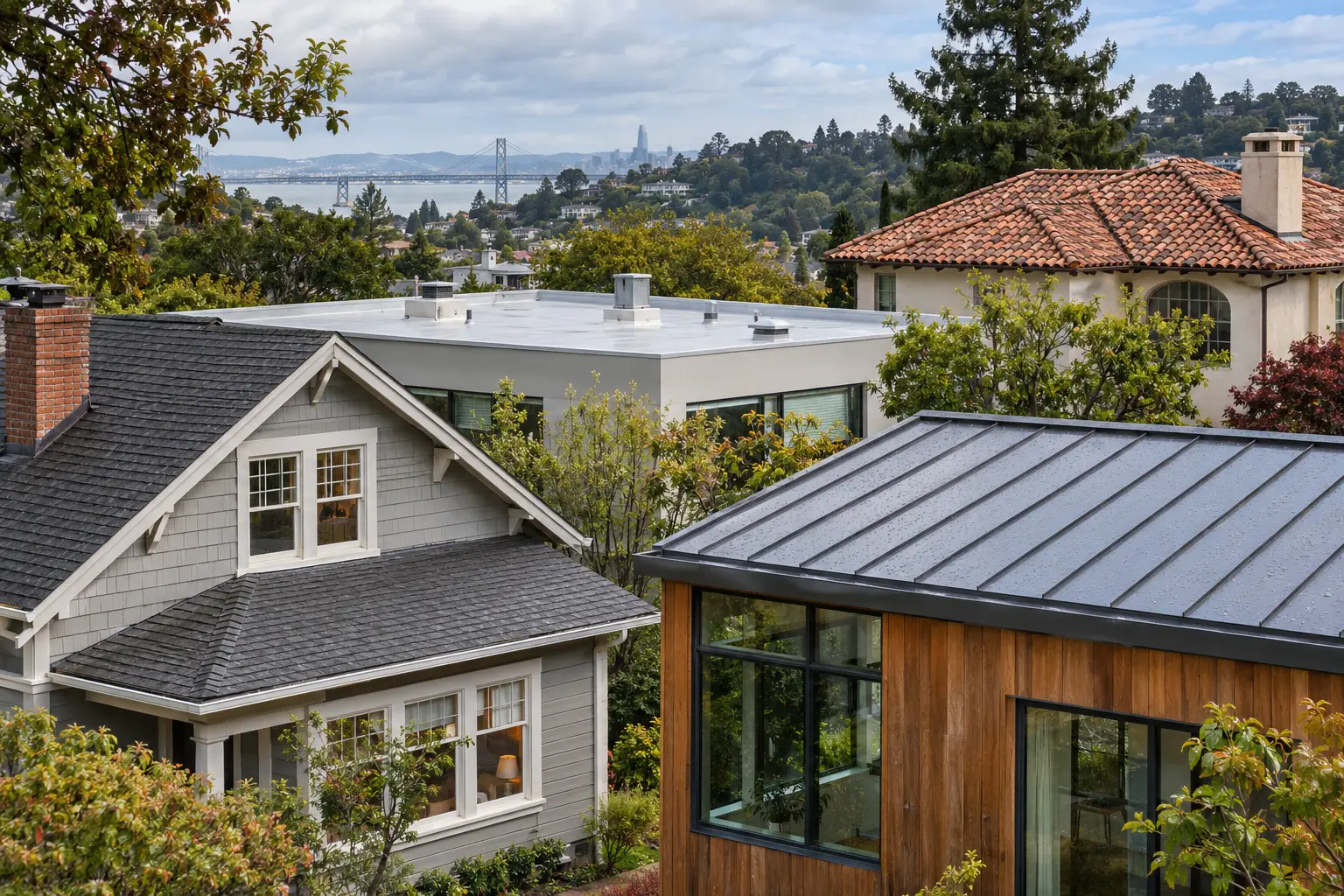
Asphalt shingles can fit many residential sloped roofs. The comparison should include pitch, valley layout, ventilation approach, edge details, and deck condition. Tile can suit properties where its appearance and assembly requirements align with the building, while weight, breakage, and flashing interfaces need attention. Metal systems can address a range of architectural and performance goals, but panel profile, seams, penetrations, expansion details, and exposure must be considered.
For low-slope roofs, TPO, PVC, and modified-bitumen assemblies are evaluated around drainage, seams, penetrations, curbs, parapets, edges, insulation, and substrate. No membrane should be presented as universally best or as a substitute for drainage planning.
Account for Bay Area exposure without oversimplifying it
The Bay Area contains coastal, bayside, shaded, wooded, and warmer inland conditions. Those differences can affect material exposure, debris, drying, temperature cycling, and detailing priorities. They do not create a single regional product answer. The same property may even combine a steep front roof, a low-slope addition, and several wall transitions that require more than one compatible approach.
Compare proposals using the same questions
Ask each contractor to identify the exact system, preparation, attachment, flashing, ventilation or insulation approach, drainage work, and treatment of penetrations. Confirm which conditions are included and which remain allowances. This makes price and scope comparisons more meaningful than comparing product names alone.
A practical comparison checklist
- Verified roof slope, geometry, drainage, and deck condition
- Exposure to coastal air, shade, heat, wind, and debris
- Compatibility at walls, valleys, curbs, skylights, and other penetrations
- Manufacturer requirements for the exact product and assembly
- Appearance, budget, use, and long-term ownership goals
- A complete scope for tear-off, substrate preparation, flashing, and installation
Choose from the roof outward
The strongest material decision is a documented system decision. Imperia Roofing & Exteriors plans complete roofing replacement and installation for Bay Area properties using the verified roof configuration, exposure, and project goals. Schedule an appointment to compare suitable options.
Recommended Internal Links
- Roofing service: https://imperiare.com/roofing/
- Roof replacement service: https://imperiare.com/roof-replacement/
- Wet-weather campaign hub: https://imperiare.com/el-nino-wet-weather-exterior-preparation/