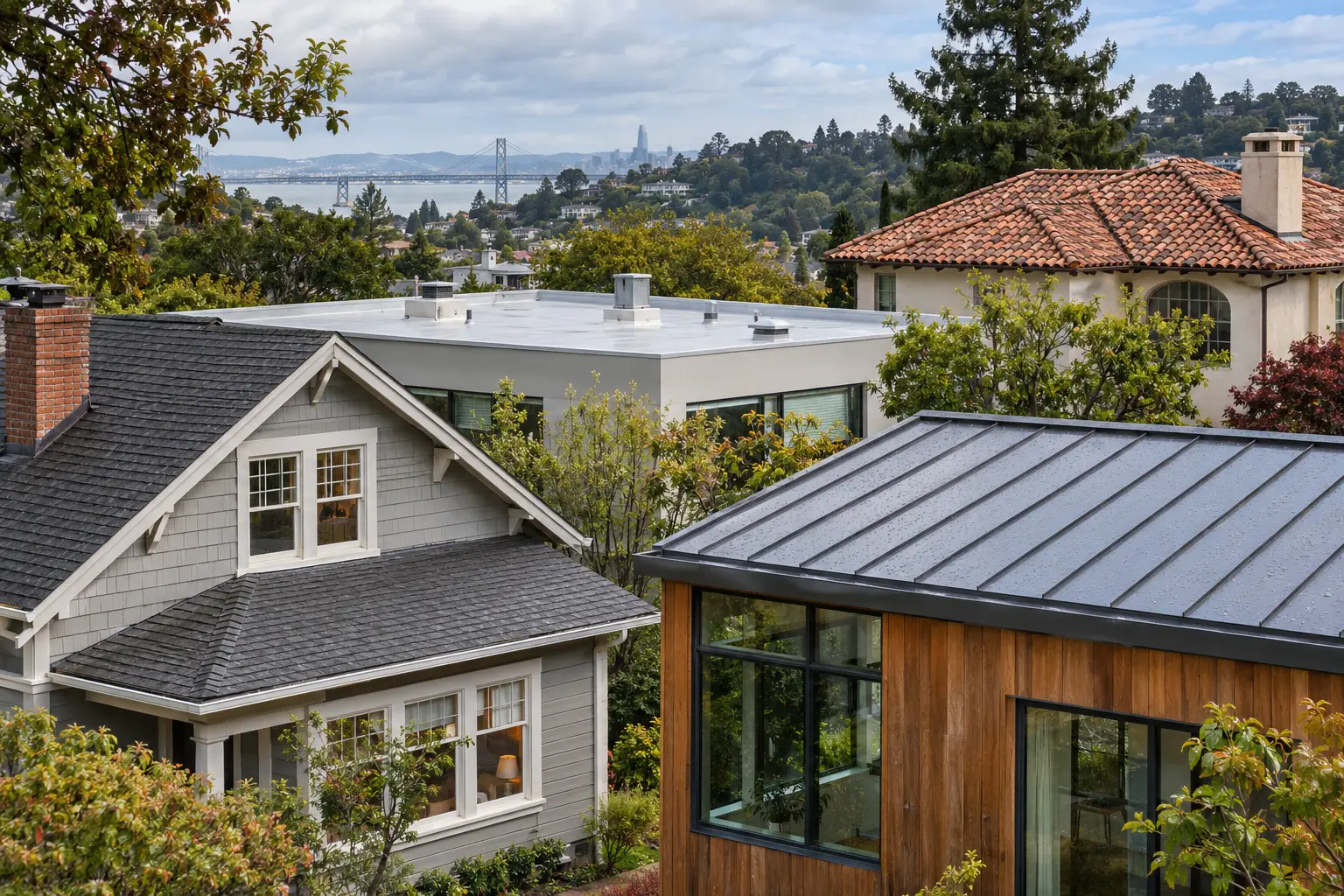
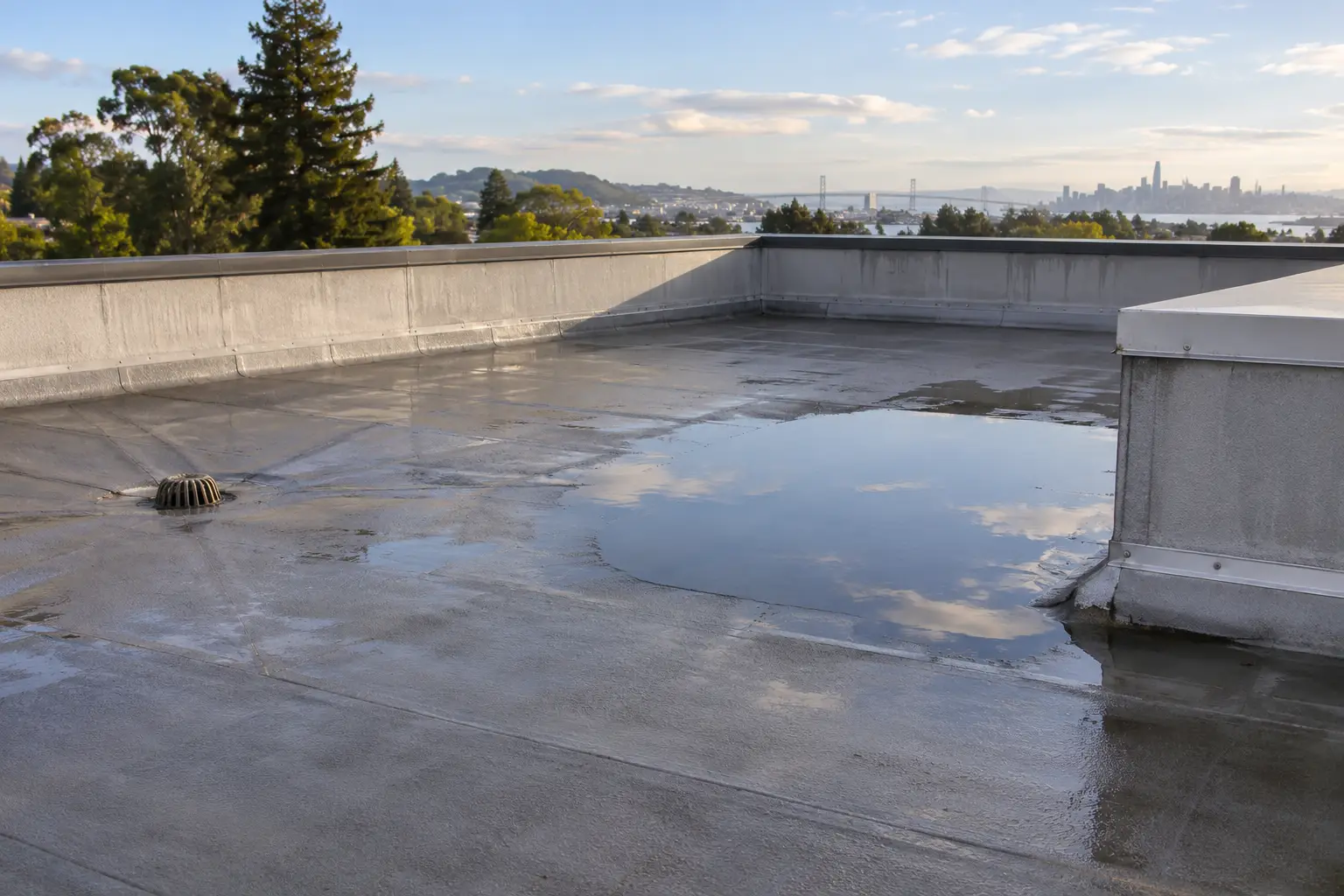
Ponding water is water that remains on a low-slope roof after rain has ended and normal drainage time has passed. A photograph taken during a storm does not by itself establish a persistent ponding condition. When standing water is repeatedly documented, however, it becomes an important part of a complete replacement conversation.
Drainage begins with geometry
Low-slope roofs rely on a coordinated path from the roof surface to drains, scuppers, gutters, or other designed discharge points. Structural slope, tapered insulation where used, deck deflection, drain elevation, perimeter conditions, and rooftop equipment can influence that path. Replacing only the membrane does not automatically change the underlying geometry.
The membrane is one part of the answer
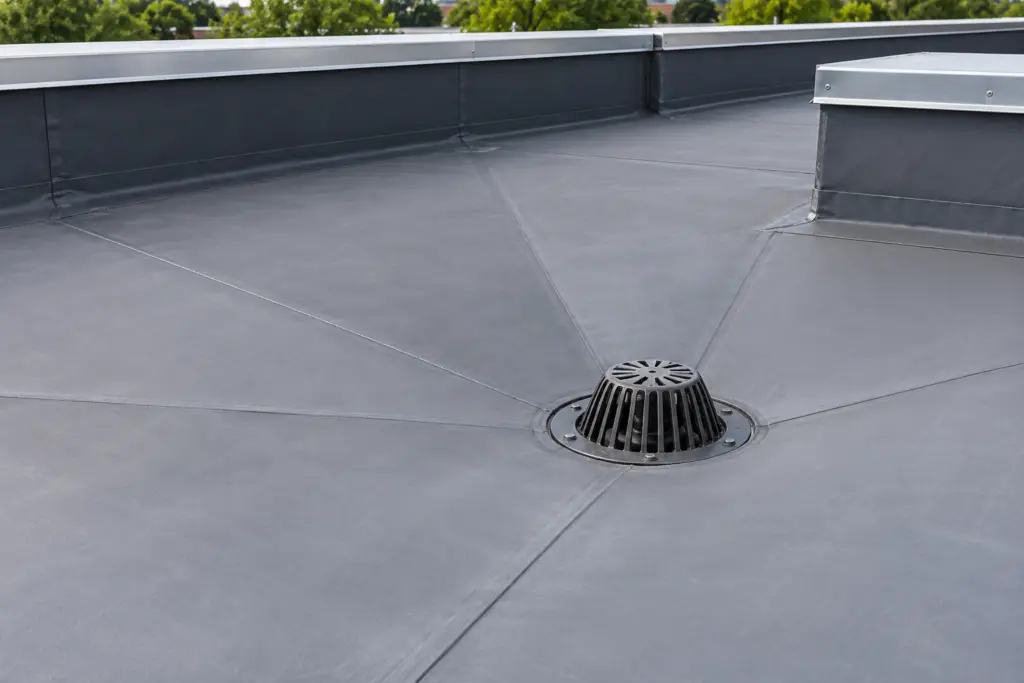
TPO, PVC, and modified-bitumen assemblies are among the systems used on Bay Area low-slope roofs. Selection depends on the verified roof, use, exposure, substrate, insulation strategy, attachment, transitions, and current manufacturer requirements. No membrane should be presented as universally suitable.
Transitions concentrate detail
Curbs, parapets, drains, scuppers, pipes, conduits, skylights, and wall connections interrupt the field of the roof. A replacement scope should identify how these areas will be prepared and integrated rather than treating them as incidental accessories. Concealed moisture effects, irregular surfaces, or prior alterations may also appear after removal.
Persistent ponding and temporary storm water are different observations
Water visible while rain is falling, or immediately afterward, may still be moving toward the drainage system. A useful record notes when the rain ended, when the area was observed, whether the water remains in the same location, and whether debris or a temporary obstruction is present. No one should access a wet roof to collect this information during unsafe conditions.
Replacement planning should address the cause of the low area
A low spot may relate to structural geometry, deck deflection, insulation layout, drain elevation, or a combination of conditions. The appropriate replacement response depends on verified measurements and the building. A membrane change alone should not be represented as correcting slope unless the approved scope actually includes that work.
Use a complete-system checklist
- Document where water remains and how long it persists after rain
- Map drains, scuppers, overflow provisions, curbs, and roof edges
- Confirm roof slope and identify low areas using appropriate field methods
- Evaluate membrane, seams, flashing, insulation, and substrate together
- Coordinate rooftop equipment and penetrations with the new assembly
- Review current manufacturer requirements for the exact proposed system
Seasonal outlooks do not replace roof-specific evidence
A broad wet-season outlook can make drainage questions more visible, but it does not prove that a roof will pond or leak. Imperia Roofing & Exteriors works with Bay Area property owners on complete flat-roof replacement and installation. Schedule an appointment to discuss drainage, transitions, substrate, and system options as one project.
Recommended Internal Links
- Roof replacement service: https://imperiare.com/roof-replacement/
- Roofing service: https://imperiare.com/roofing/
- Wet-weather campaign hub: https://imperiare.com/el-nino-wet-weather-exterior-preparation/