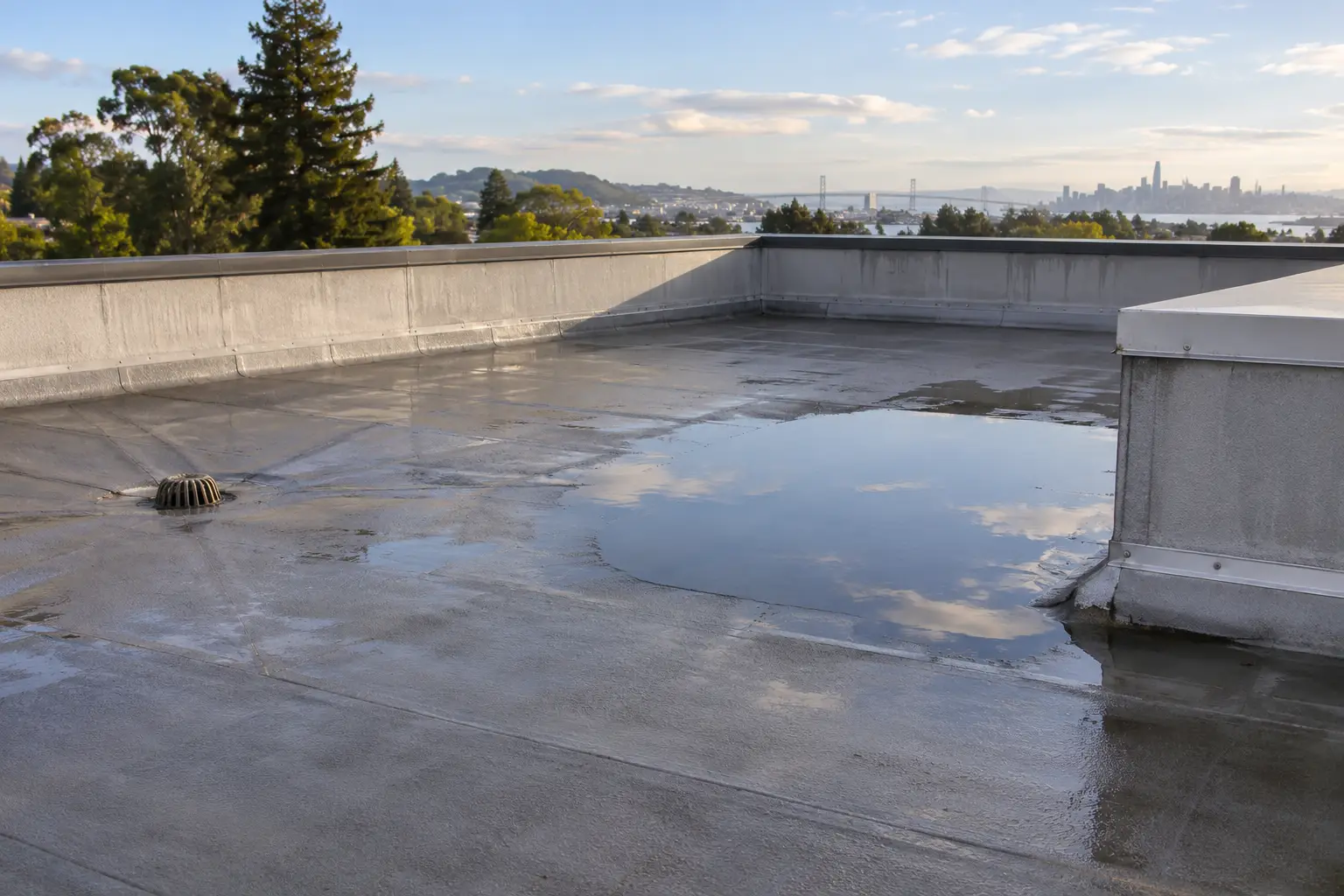

Rain does not always fall straight down. Wind can move water across roof surfaces and toward joints, walls, edges, valleys, and penetrations. That does not mean every windy rain event will cause a problem. It means these transitions deserve explicit planning during a complete roof replacement.
The field of the roof is usually the simplest area
Large uninterrupted surfaces have a comparatively direct job: shed or manage water according to the assembly. Complexity increases where the roof changes direction or meets another component. Valleys collect runoff from two planes. Walls stop the plane. Chimneys and skylights interrupt it. Pipes and vents create smaller openings that still need compatible details.
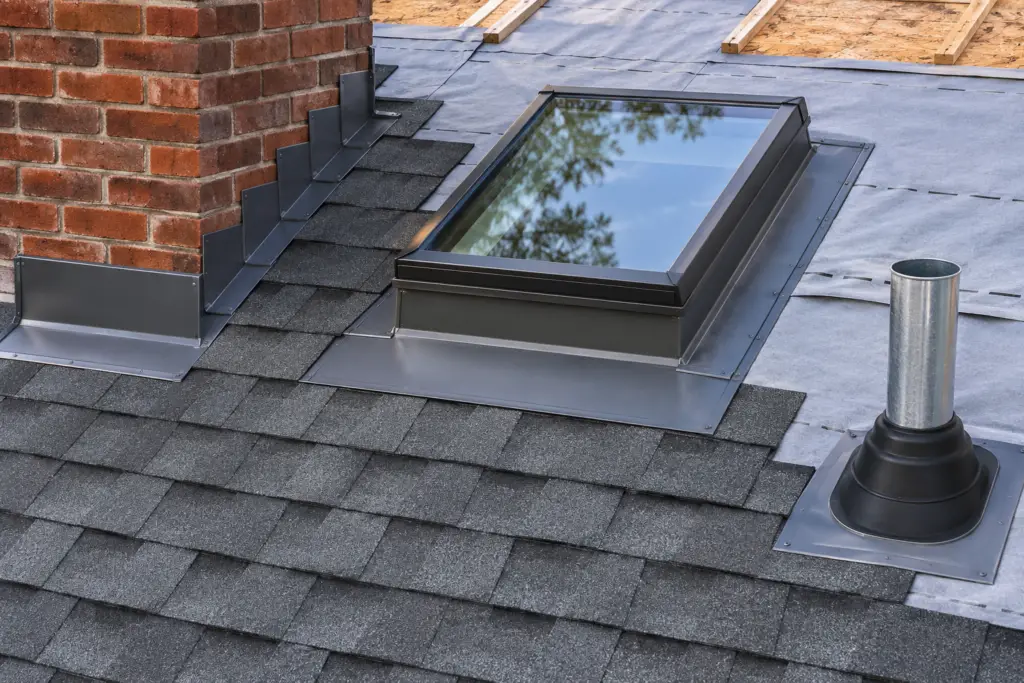
Flashing redirects water at the interruption
Flashing is not one universal piece. The term covers components used at edges, walls, valleys, chimneys, skylights, vents, and other transitions. Each detail needs to work with the roof covering, underlayment, substrate, and adjoining material. Sequence matters because water should be directed onto the drainage surface rather than behind it.
Map every penetration before work begins
A preconstruction roof plan should identify existing penetrations and determine which remain, move, or are removed as part of the verified project. Abandoned openings, equipment curbs, satellite mounts, conduit, and plumbing vents can complicate the scope. Decisions should be coordinated before installation rather than improvised after the new roof is underway.
Skylights and chimneys create distinct interfaces
A skylight brings together the roof assembly, the unit, a curb or frame, and product-specific flashing. A chimney adds masonry or another wall surface, corners, and an upslope condition. Reuse or replacement decisions should follow the verified age, condition, configuration, and compatibility of the component. The roofing proposal should state what is included rather than leaving the interface undefined.
Transitions also need access
Some details cannot be completed correctly without temporary removal or coordination of siding, stucco, trim, equipment, or another adjoining material. That related work should be identified in advance, including who performs it and how the finished transition will be restored. Clear responsibility helps prevent gaps between trades.
A transition-focused review
- Map valleys, roof-to-wall intersections, parapets, and changes in slope
- List every pipe, vent, skylight, chimney, curb, and equipment penetration
- Identify adjoining siding, stucco, masonry, or trim that affects access
- Confirm which items remain and which are included in the replacement scope
- Match flashing details to the selected system and verified construction
- Photograph critical stages before finish materials conceal the work
Make the details part of the scope
Official weather information supports planning and safety, but it cannot diagnose a roof. Imperia Roofing & Exteriors plans complete Bay Area roof replacement and installation with attention to transitions, penetrations, drainage, underlayment, and substrate. Schedule an appointment to discuss a complete system.
Recommended Internal Links
- Roofing service: https://imperiare.com/roofing/
- Roof replacement service: https://imperiare.com/roof-replacement/
- Schedule an appointment: https://imperiare.com/schedule-an-appointment/