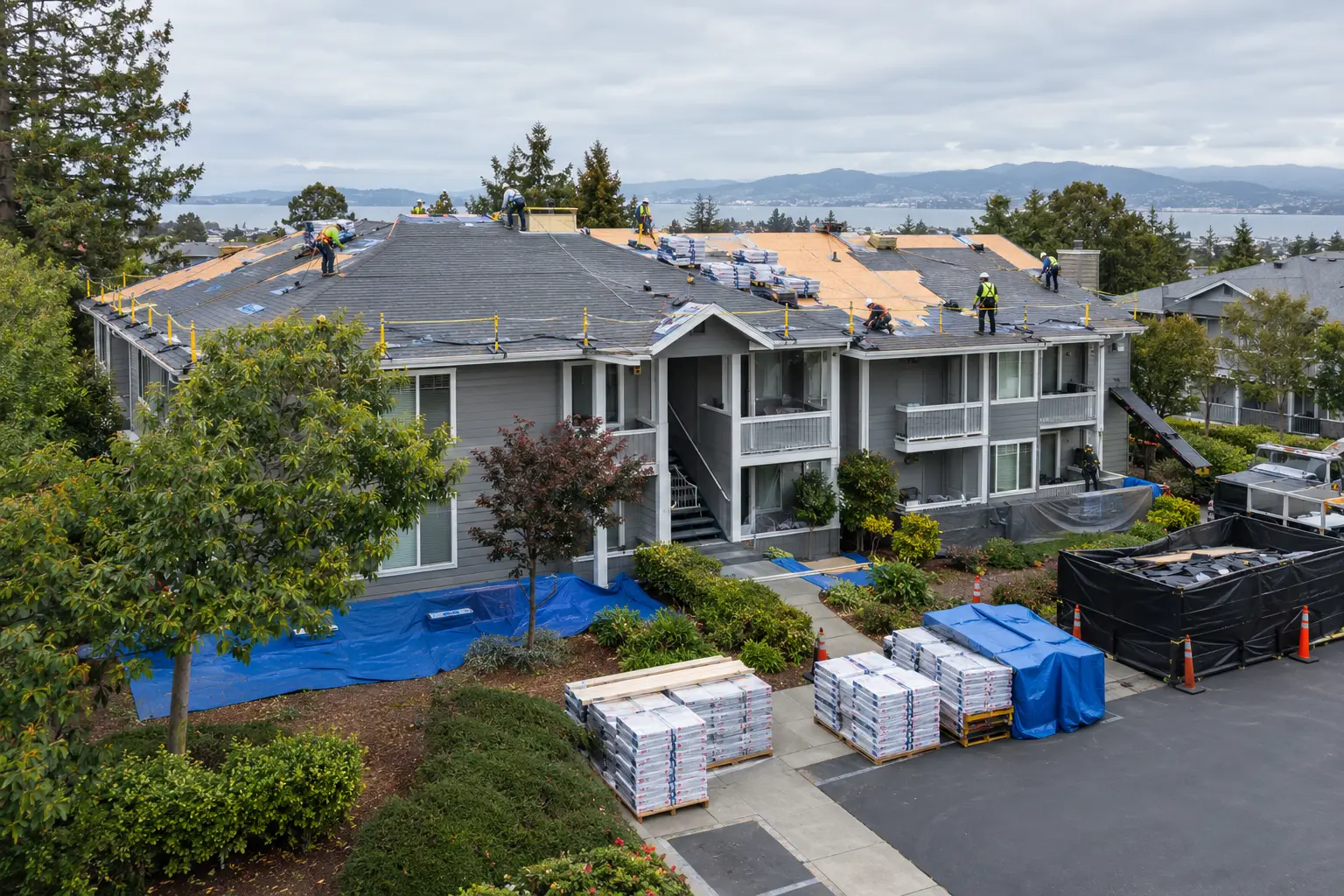
A multi-unit roof replacement affects more than the roof. Residents, property managers, parking, access, deliveries, noise, rooftop equipment, and common areas all become part of the project plan. During the wet season, weather monitoring adds another operational layer, but it should not be used to promise an exact start or uninterrupted schedule.
Define the property and decision structure
Identify the buildings, roof areas, ownership structure, decision-makers, and occupied spaces included in the scope. A condominium association, apartment owner, commercial owner, and mixed-use property may have different approval and communication needs. The proposal should state which areas are included and how alternates or concealed conditions will be handled.

Map access before materials arrive
Material staging, debris handling, ladders, lifts, pedestrian routes, parking, landscaping, and emergency access need coordination. Some roofs contain mechanical equipment, solar components, communication equipment, or tenant improvements that require separate responsibility and scheduling. These interfaces should be identified early.
Sequence work around occupancy
A complete replacement may be divided by building, roof area, elevation, or another logical phase. The sequence should consider how much existing roof can be removed and secured within the planned work period, where materials can be stored, and how changing conditions will be communicated. The daily plan belongs in project operations, not in a marketing promise.
Create a communication rhythm
Residents and occupants need practical information: anticipated work areas, access limitations, noise expectations, vehicle moves, contact channels, and preparation requested by property management. Updates should distinguish confirmed information from weather-dependent changes.
Document building-specific interfaces
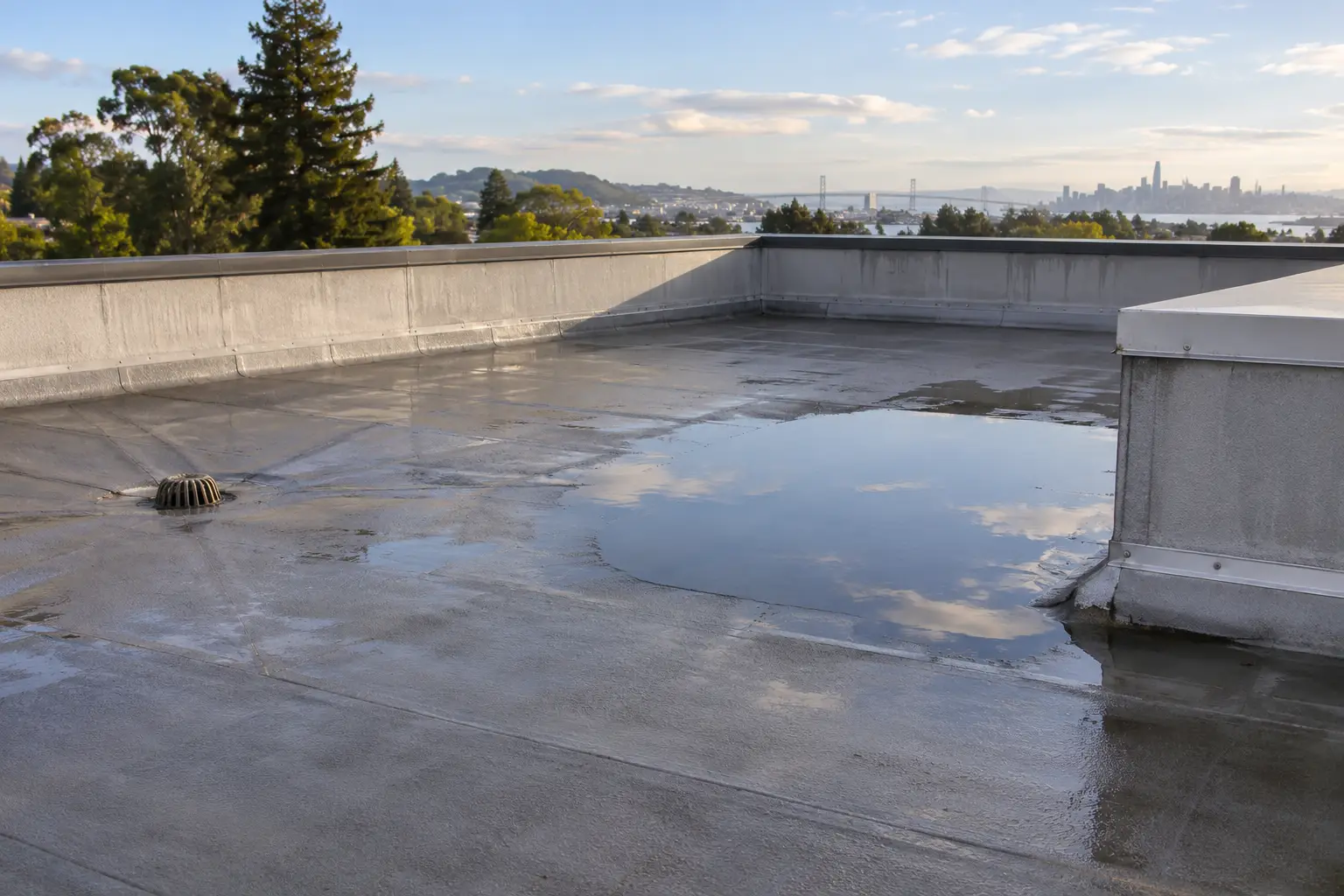
Multi-unit roofs often contain shared vents, mechanical curbs, roof hatches, drains, parapets, solar equipment, and additions completed at different times. The project record should identify who owns or controls each interface and whether separate vendors are needed. A complete roofing scope cannot assume that every rooftop component can remain untouched.
Plan for daily security and closeout
Property management should know how work areas will be left at the end of the day, how temporary conditions will be communicated, and how debris or access restrictions will be handled. Closeout should connect approved documentation to the actual building and roof area. Product, permit, inspection, and warranty records should be included only when verified for that project.
Use forecasts at the correct scale
A seasonal NOAA outlook can inform broad planning, but it cannot select a workday. Short-range NWS Bay Area forecasts are more relevant to daily sequencing, and they still change. During active warnings, safety instructions take priority and commercial messaging should stop.
Coordinate the complete project
Imperia Roofing & Exteriors works with Bay Area owners and managers planning complete roofing replacement and installation for residential, commercial, and multi-unit properties. Schedule an appointment to discuss the building, roofing system, access, sequencing, and communication needs.
Recommended Internal Links
- Roof replacement service: https://imperiare.com/roof-replacement/
- Roofing service: https://imperiare.com/roofing/
- Wet-weather campaign hub: https://imperiare.com/el-nino-wet-weather-exterior-preparation/